The opinions expressed are mine and do not reflect the positions of the Peace Corps or the US government.

Thursday, August 29, 2013

Swearing In

August 29, 2013

Today 33 of us will take the same oath that the President takes as we are sworn in as Peace Corps Volunteers. No longer Peace Corps Trainees, we will be the real deal. How intense is that? We understand that more than 200 people will be there to witness it.

We're ecstatic, exhausted, and - a bit terrified. Because, tomorrow the Peace Corps transport will take us and all our accumulated stuff to our new sites, unload it and drive away. We will be left with a list of assignments and an admonishment to get out of our hut every day. 

Till now the training has been intense: filling us up with information. Now, finally it's time to look OUTWARD, to use all this information in something beyond daily survival skills. Yikes!

So -  a few observations to share: 

As I looked around my homestead and community, I discovered vistas almost every day. Did my eyes adjust to the new, and begin to take in hitherto unnoticed details? Was it the gradual change of seasons, as Spring begins it's sneaky magic? Not sure, but it seemed the beauty increased almost daily.

Polygamy (men with more than one wife, not the other way around), although not all that common,  is accepted here.  At least one volunteer will be staying on such a homestead. 

There are 2 types of marriage: traditional and civil (though civil ceremonies may take place in a church or through a court, same as in the US). In traditional marriages, the two families will merge, become one family in very real ways. The results can mean many things, I think, and varies a bit with the individuals. But think about how that would differ from our own ways of doing things.

Culture is such a strong word, and covers so much. Tribal structure and culture is such a long way from the feudal and then industrial and now informational cultures of that we know. A grandmother, "Gogo" (a term of much respect), came to talk to us about the the traditions she fears are being lost as Swaziland grows. She spoke of how what it means to be a man, to be a woman, are changing, and losing some of the strengths that have served Swazis in generations past. It was eye-opening in many ways - gave me much to contemplate about change, growth, and how I can work with my community. With HIV such a strong reality, talking about sexuality must be much more frank than at home. How Swazis, as a group, view it is changing. How? And how do the individuals with whom I'll be working view it?

And boundaries: what is okay to ask? What is is okay to not answer? Personally? In a teaching situation? How do we address the the stigma of AIDS? Any stigmas, for that matter?

So many questions to ask. So many answers to evade me.

Thursday, August 15, 2013

Striding Along


6 August 2013

This journey, though fewer than 6 weeks so far, has truly taken me a world away. My new normals are so very different. Each step, from a distance, seems impossible, and then there I am,  striding along.

Today  my steps took me traveling to the place that will be my home for 2 years. Make and Babe are retired, almost my age, with one son still at home, a couple of nieces and several grandchildren. Everyone seems friendly and kind. My house has 2 rooms, electricity, and a nearby latrine. Water will be either rainwater or from a well, and we'll have a garden. I want to try it some of the permagardening techniques I am learning.

Steps. I'll have plenty of walking to the high school, which is about a kilometer away. Not sure how that will shake down, as I hope to also work with out of school youth. Guess I will have lots of time to figure it out as I learn about my community.

Training has been filling us up with so very much - and now I'll get to begin using some of it. I look over my shoulder at where I've been and I am amazed. Look how far we trainees have travelled! Things that were bothersome are fading as new concerns take their places. I'm still struggling with plateaus in learning the language, but that's just one piece. And the group dynamics are changing as we get to know each other and as we look at where we'll be geographically. Those who are not kindred spirits are self-identifying, and those who may be are opening as well. We've been together long enough for the honeymoon to be over and  for respect to be earned (or not).

This has been a time of mistakes, for me, as I find my balance in a world so very different from the one I've known.  Peace Corps has called it, having observed the process for more than 50 years, but living it is different than hearing about it. Still, it is good to know that it's a time I'm supposed to make mistakes, and to give myself permission to do so. I'm certainly making my share, and learning from them as I fall down and go boom. But the process of encouraging mistakes is really new - and actually freeing! And expected, which is also new. I challenge you to try it -try encouraging yourself to make mistakes as you learn, instead of striving for perfection.

Swazi time - a way to slow down and pay attention to the process. Frustrating!
In so many instances I can't get there from here, 'soda' speak; or, at least not in a straight line, as I'd like to. So, slow it down, be patient, and a way will finally emerge.

It has been said, here, that I am most introspective. Yep. That's what it takes for me to come to peace with situations that bother me. But that aside, I find myself grinning like crazy, with a wild happiness inside, humming along with some ancient rock n roll song as the ibhasi (bus) rocks and rolls on the rutted dirt roads taking us to and from classes. In some strange way, as I study the Swazi language and culture and find my place within the training culture, I'm finding my place in this world.

Snippets


4 August 2013

Snippets

I'm writing this  with a keyboard attached by bluetooth to my ipad by flashlight and candlelight.  What a strange combination of technology and - and what?`Just took a candle over to my host family. I balance my keyboard on my SiSwati language manual, and the irony and incongruity amaze me.

Still, I want to share snippets of life here. And to reassure you that when I can, I'll post pictures. This land is incredibly beautiful; the vistas that greet me as I walk to the stesh (bus stop) each day fill my heart. So here are a few snapshot moments.

~"What happened on September 6 (Independence Day)? "The British allowed us to speak our own language in the schools."

~New Normals: waking to rooster choirs, usually before dawn. Dirt roads. Buying veges that have to be picked to be sold. Greeting everyone, every time we meet. Seeing drivers on the right. Choosing outhouses for cleanliness (flush toilets not even a consideration). Eating everything with a spoon (or my hands). Getting used to British words, especially those that could be embarrassing. We say napkins, they say serviettes. We say diapers, they say napkins. And they often stress a different syllable than we do, even when we share words, which makes life interesting as well. I've discovered that if I don't look directly at the speaker, I often misunderstand the message. Interesting self-observation, for sure.

Luxuries that used to be givens:  being able to wade and swim in rivers and lakes. Well water. Heat in the house. Refrigerators and ovens. Cell phones, wifi that works. Fast wifi. SHOWERS.

And we're all becoming adept at reusing rather than recycling. For example, hauling water makes us most aware of waste. So the laundry rinse water can become the floor mopping water. All the waste water goes onto the lawn or plants. Cardboard juice boxes can be made into wallets that won't draw attention. No string is thrown out, nor plastic bags.

It is now August 13. My posts are overlapping since getting them online can be challenging. But a few more snippets before I attempt to get this to my blog:

A little girl,  too short to reach the latch, launches herself (backpack intact) at the gate, climbs up high enough to unlatc it, then drops nimbly to the ground, strolls through, closes the gate and heads down the path to walk the kilometer to school.

Hungry, grumpy pre-schoolers headed home on a bus, bouncing along a dirt road singing aloud for all they're worth. Staff are exhausted and kids are going strong.

Spending the night with a PCV mentor who lives in 1 small room, making use of every inch of space, including the walls which, at small child eye-level, are covered with small child art. Her latrine is rickety and out in a field; her perspective is that it has one of the best views in Swaziland.

This land overflows with people with big hearts and with opportunities for gratitude. All I need do is open my eyes.

Tuesday, August 13, 2013

A Few Pix

Here are a few pix from travels thus far.

My current rondaval aka "Posh Corps."

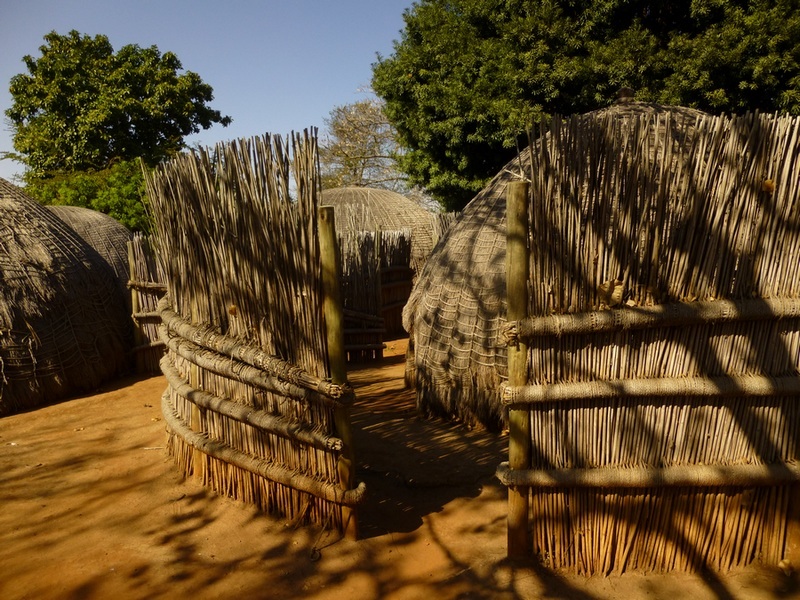
A traditional village as seen at the Cultural Village

Traditional dancers at the Cultural Village


Impala at the game preserve.

Eland at the game preserve.

Zebra at the game preserve

My new homestead starting at the end of this month. end of this month. You can't see my actual hut, but it's in the trees just in front of the latrine, which is the building with two doors on the far right. 

"Khokho (Great Grandmother) Mahlalela shucking maize. And how many of us can sit comfortably on the ground like that? She's older than we are! Nothing is wasted: the maize will feed the chickens, the husks will feed the cattle and the cobs will fuel cookfires."

I asked her permission to post this pic, and she was a bit embarrassed and more delighted. Perhaps the rest of the family will let me post their pix, too. I'll ask soon.

The wind is warm tonight, and gusting past the stars. The newborn piglets grumble now and then and all in all, Africa is a pretty cool place to be.


Sunday, August 11, 2013

Betwixt and Between


30 July 2013


Last week marked the halfway point for PST – Pre Service Training – and we’re right on schedule, according to the Peace Corps, in our transitions: we’re neither there nor here.

I find I’m adapting almost without being aware of it. I still think longingly of a real store, but realize I can find much of what I need within walking distance. Sometimes I eat ‘chicken dust’ at lunch (yummy barbecue chicken with a small salad and a huge helping of liphalishi, a “porridge” that’s thick enough to be sort of solid and tastes a bit like corn bread without the eggs – hard to explain) bought from a roadside stand. Dinner on those days means feasting on whatever fresh fruits and veges I have on hand – perhaps papaya, avocado or baked pumpkin -   all local and flavorful. However, after washing clothes in a washtub, I will never diss another laundromat.

My internal journey is not so easy. I want instant perfection yesterday, as well as to learn without mistakes, judgment (of self or others) or difficulty. Right! Turns out that while I thought I’d be learning all about Swaziland, I’m actually learning more about myself. So I’m making a concerted effort to look for strengths and to adopt a learner’s mind and attitude. We had a whole training session on participatory organizing (look for strengths to build on rather than problems to fix). Perfect timing!

Slowly, too, I am developing rapport with my host family. We laugh a lot and hang out some and all of us are learning, I think, about each other. I like the gradual growth of trust and sharing – gives me some alone time and helps me appreciate what is happening.

Technology has been providing some interesting lessons, too. I finally have a phone, and thought I’d be able to tether it to my laptop and have internet access. Not quite that easy. The charger on my phone doesn’t work, the battery on my laptop isn’t charging, the internet continues to be iffy, and the software to tether it isn’t available yet. Sigh. So much for expectations. I will answer emails – but for now, the answers will be short, since typing on my phone isn’t all that easy <grin>. And these posts will continue to be pictureless until I get things straightened out.

But if all this sounds discouraged – I’m not. At the end of last week we had tests to see if we’re learning, then we got some ideas about where we might be placed, we bought our phones and then – a field trip!

We visited a sustainable permagardening site, then a museum, then a cultural demonstration village. We heard music, saw a traditional dance and toured a mock up of a traditional village. The music touched something deep inside, and the dancers moved with grace and skill. Pictures will be posted when I can.

We wound up late afternoon at Sondzela, a game reserve, and saw zebras and impalas grazing as we drove in. We spent the night, so had time for several walks through the African countryside. I wish I could describe the emotions that washed over me as the savannah stretched in rolling hills before me. The land changed radically when we entered a copse of trees. We went from grassland to forest in a few steps, it seemed. As we followed the path next to the creek, I felt I could be in the Siskiyous, but when we emerged into the sunlight, we were elsewhere again. At one point the path was one-person narrow, winding through vegetation and clay and stone hillsides. We rounded a corner to find a large antlered buck grazing. He was in no hurry to move, so we stood a while, then shooed him forward. He ambled along, unable to leave the path, chomping a mouthful here and there, leading us on. When he was able, he left the path and disappeared into the brush. Magic.

We emerged, at last, at the hippo pond, where we saw no hippos, but a large crocodile swimming serenely along across the water. A couple of huge turtles also sunned themselves sleepily at the shore. We cannot swim or even wade in standing water because there’s a disease carried by snails that would take 2 years to get out of our bodies. Sigh. The call of the water was almost overwhelming.

We headed back, ho humming about the zebras and impalas, stopped to check back in to the visitor center (they make hikers register, even day hikers), and sit blissing out, eating Death by Chocolate bars ice cream and watching the warthogs graze. Then back to the lodge.

Did I mention we had our first showers in 3 weeks that first night? Imagine how luxurious all that hot water cascading over our heads felt. For those of you who have done a Grand trip, think about the first shower off river. Better than that!

Now it’s back to work, to language lessons and learning about the culture and people. Tomorrow we visit a traditional healer. Saturday I will know where my permanent site will be and what I will be doing. Next week we go visit our permanent sites. Peace Corps is taking us step by step towards the day when they will drive us and all our gear to our permanent site and then drive away. By then we will have crossed the between and will begin a new betwixt. For now, this one is enough.

Tuesday, July 30, 2013

What’s it really like? July 14, 2013


I’ve now been with my host family for almost 2 weeks, so the overload of everything new is beginning to sort itself out. In 2 more weeks I’ll get a phone, and hopefully will have more than just sporadic internet after that. For now, we’ll make do with my skills at giving you visuals through words.

I live in what other PCTs (Peace Corps Trainees) refer to as “Posh Corps”. My room is spacious, there are carpet pieces on the cement floor, and I have electricity, a chair, a double bed and a small dressing table. Even the outhouse is clean. Of course, we all haul water, then boil it to wash and filter the boiled water to drink. None of us have heaters in our rooms, which get pretty cold at night, and my one light barely lights up the room. Bucket baths have become a way of life, and washing hair is a major luxury since it must be done early on a sunny day, and our time is pretty well scheduled for us. The dogs, pigs, roosters and cattle provide background music, and twice already the tap has gone dry, once for 4 days. I still had water, but it definitely cut back on cleaning and doing laundry.

My family is wonderful – we interact often enough that I believe I’m building trust, but there are enough spaces in our time together that I don’t feel crowded. They are helping me learn the language, and seem endlessly patient with me.

The roads are – words escape me. None of the roads out here have names, and are red clay, eroded into interesting shapes. There are no bar ditches to direct water, so use your imagination. To find where another PCT lives, you meet the person and follow her/him to her homestead. Even with directions, it’s most confusing, since some of what looks like road turns out to be driveway. But most homesteads have fences and gates. Also, the way is as likely to be a path as a road.

Most of the places I’ve seen have gardens and/or fruit trees, as well as livestock running loose most everywhere. That would be chickens, geese, turkeys, an occasional pig or 2 and some cattle. My family has 5 options for cooking: in the fireplace or outdoors with pots on 3 legs which come in a variety of sizes, using the wood cookstove, the electric range or the electric two burner. They haul water, too, and everyone bathes twice a day. I dread it because it gets so cold. I have it somewhat down: top half first, dress it, then bottom half, but I think we all have our own methods.

Peace Corps is easing us into cooking for ourselves (which starts next week) by having a week with 2 cooking activities. First we planned a typical Swazi meal, shopped locally (which meant asking around for which Gogo (grandmother) is selling what). There are also the equivalents of corner stores, with limited goods, within walking distance. We found fresh sugar beans, Swiss chard, a chicken and beets. The store had curry powder, and one of us had some onions. We were good to go. Then we were allowed to shop at a bigger grocery store, and today we made American food. Yummmm! We competed in groups, and our group won prizes – mind was an amazing looking little device that looks a little like a top, and is used to juice lemons and oranges. Yes!!!

Language continues to be a big part of our training, and also a real challenge for me. Ah well, I just keep plugging away, and hopefully it will all gel at some point. The letters are what we know and use, but the sounds are different, and the structure of the language is very different, which makes life most interesting.

This week we are going to visit a school (I get to go to the high school – YES!) and to the chief’s residence. We’ll also be asking our host family members what they do each day. I expect it to be most revealing.

I started with What’s It Really Like, and truthfully – I don’t know! There’s still so much to absorb, to incorporate into my new normal. I’m most grateful for my camping and river skills. I know how to look around, see what needs to be done, and find out how to do it. I’m pretty good with faking it, hooking up my propane stove and keeping things tidy so I can find them again. For all of you who helped me gain those skills: THANKS!

My challenge to you: If you had to write a blog about What’s It Really Like for your own life – what would you include? Exclude? Why?

It’s Harder than I Thought: July 11, 2013


“Leave your expectations at home!” we were advised. So I did. Yeow! I had no idea… Peace Corps has integrated volunteers for more than 50 years – they have it down. They toss us in the water, but make sure there are people and lifesaver rings around to keep us from drowning. Then, slowly, support withdraws. Every now and then I realize I’m not in a pool, but in an ocean, and take on faith that I really will be swimming before long.

Our days are chockfull. Language classes are the most intense, especially for me, since sometimes I think my brain is just a sieve. I hear and repeat and write and use and hear and repeat and still forget. Fortunately some is sticking, and that gives a place for more to stick. It’s just much more slowly than I would like. Tonight I’ve been re-writing my notes so I can find what I need more easily, and practicing with flash cards.

In addition, there are classes in safety and nutrition, and hands-on lessons in all kinds of skills, including composting (building a compost pile, rather than keeping an ongoing compost pile for food scraps) and permagardening. The soil here is like Oregon red clay, so I hope to bring home some of the experience many of you already have.

We’re on our own for breakfast and lunch, and with stores as we know them out of our reach, I’m making do with what the Peace Corps gave me and what I can get locally. Today we sought local food for a meal we will make tomorrow; that consisted mostly of talking to each other and other groups of students (our group has 4 students, one thisela (instructor). We found a live chicken (which someone will kill for us, but we will have to clean), beans, fresh beets, green peppers and rice. The emakotapeni (avocados) are just ripening and we didn’t find any, though a couple of days ago I bought a couple of not yet ripe giant ones for about 20 cents) each. Yummm! I hope to be able to cook for my host family soon.

Classes start early (between 7:00 and 8:00) and end in the afternoons – sometimes not until 4 or later. Then it’s back to our homesteads to do chores: haul, boil and purify water, do dishes and laundry, clean our homes and ourselves, interact with our host families. And though the days are sometimes warm, nights are cold without heat. Add in that we are in a foreign country where we are surrounded by language we don’t understand, in a culture that could take our actions as offensive no matter how we mean those actions… We’re adults, with others structuring almost all our time. Yep, definitely harder than I thought.

All of my energy seems to be going into just learning and surviving; it feels like all work and few rewards. Then it hit me: this is how people who are making changes in their lives feel. Sometimes overwhelmed. Sometimes as though no amount of trying can be enough. Sometimes as though the goal is invisible.

So, of course, the next questions arise: How can I
  • Reward myself?
  • Use this experience to understand and communicate with others?
  • Enhance my teaching skills?
  • Build self-confidence by looking at what I am learning and accomplishing?
  • Give myself credit for what I have already learned?
  • Pay attention to what I am feeling and realize my students will be feeling this way, too. Then discover how I can acknowledge, honor and address that experience?
Just recognizing how daunting these changes are helps. I’m more positive now than I was this morning. The answers will come with time, and framing the situation as a learning experience I can use also helps.

I know I’ll be swimming on my own soon; all I have to do is keep working as hard as I can, pay attention and allow my friends and family to support me. Oh yeah, and breathe.